Custom ERP
An ERP shaped like your business. Not the other way round.
Off-the-shelf ERP makes you bend your process to its screens. We build the system around how your floor, your vendors and your accounts actually work — and keep it in step with the accounting software you already file from.
parteek45j-textile-erp.vercel.app — Sample company and data. Login on request.
Textile ERP
Apparel manufacturer, Ludhiana
A multi-company ERP for a T-shirt manufacturer: roll-level fabric stock, production with job-workers, GST sales and purchase, receivables and payables — built from the owner’s process, not a template.
- Phases live
- 3 of 6
- Used from
- Office PC · Phone
- Tenancy
- Multi-company
- Stack
- Next.js · Postgres
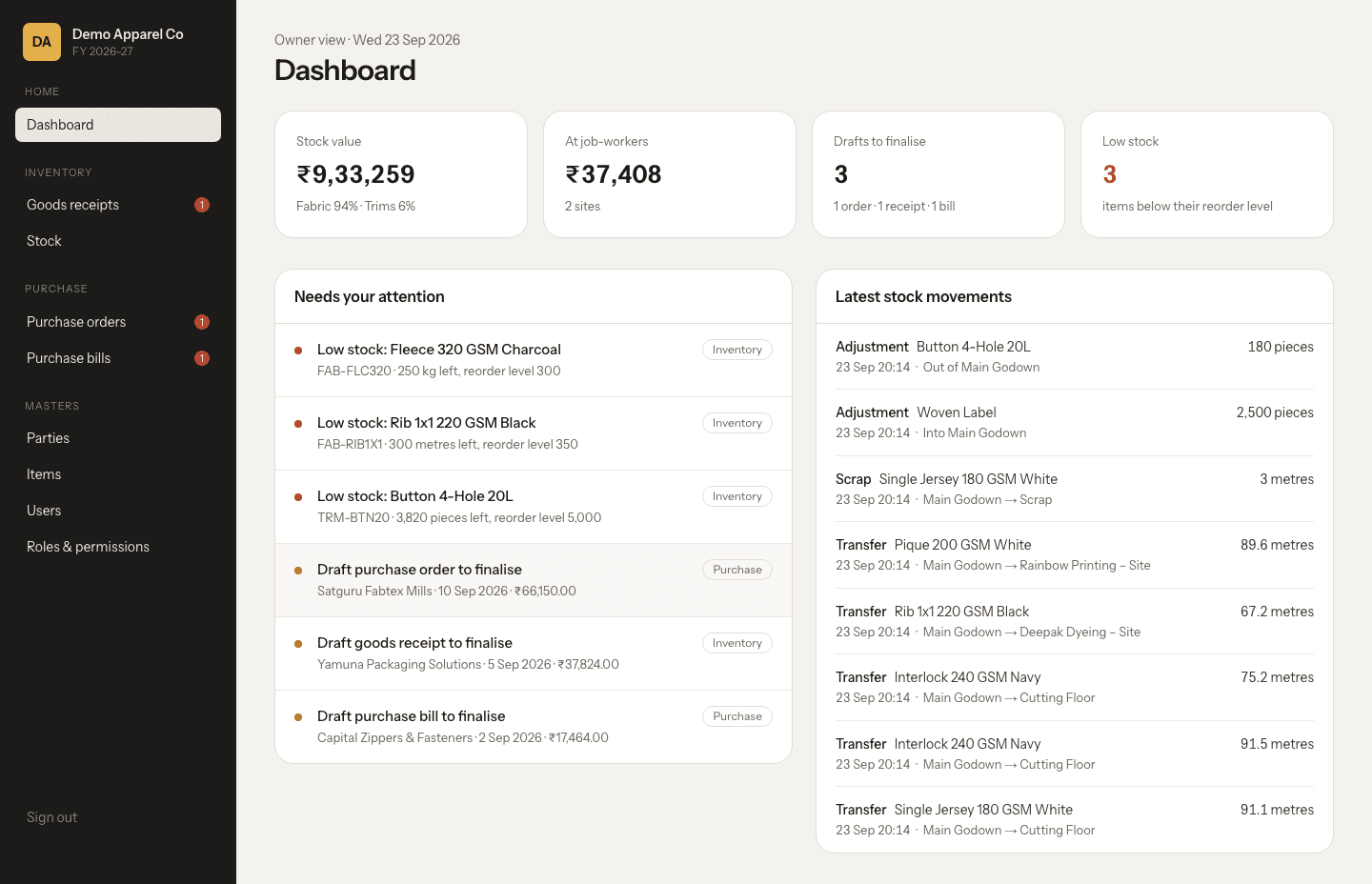
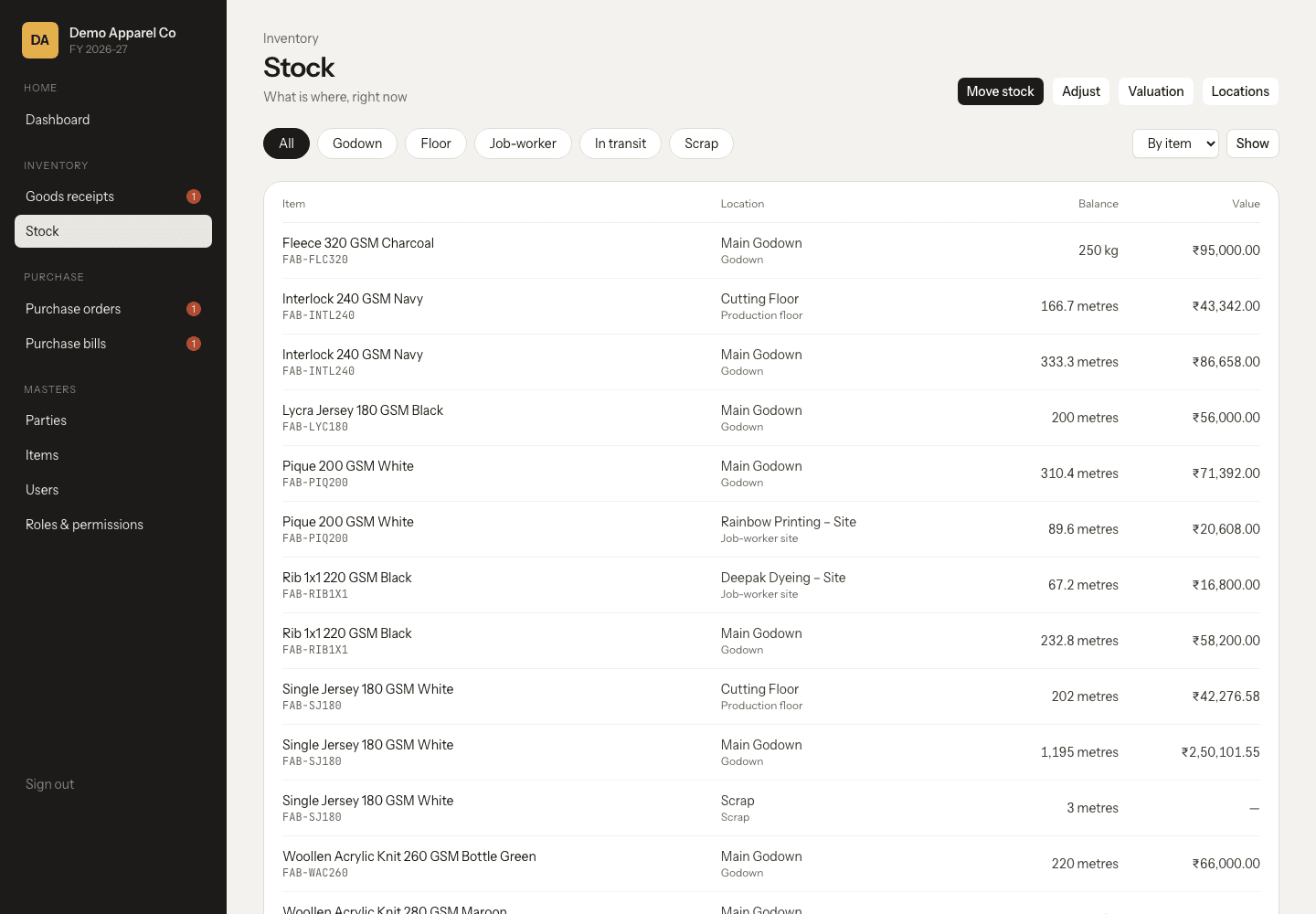
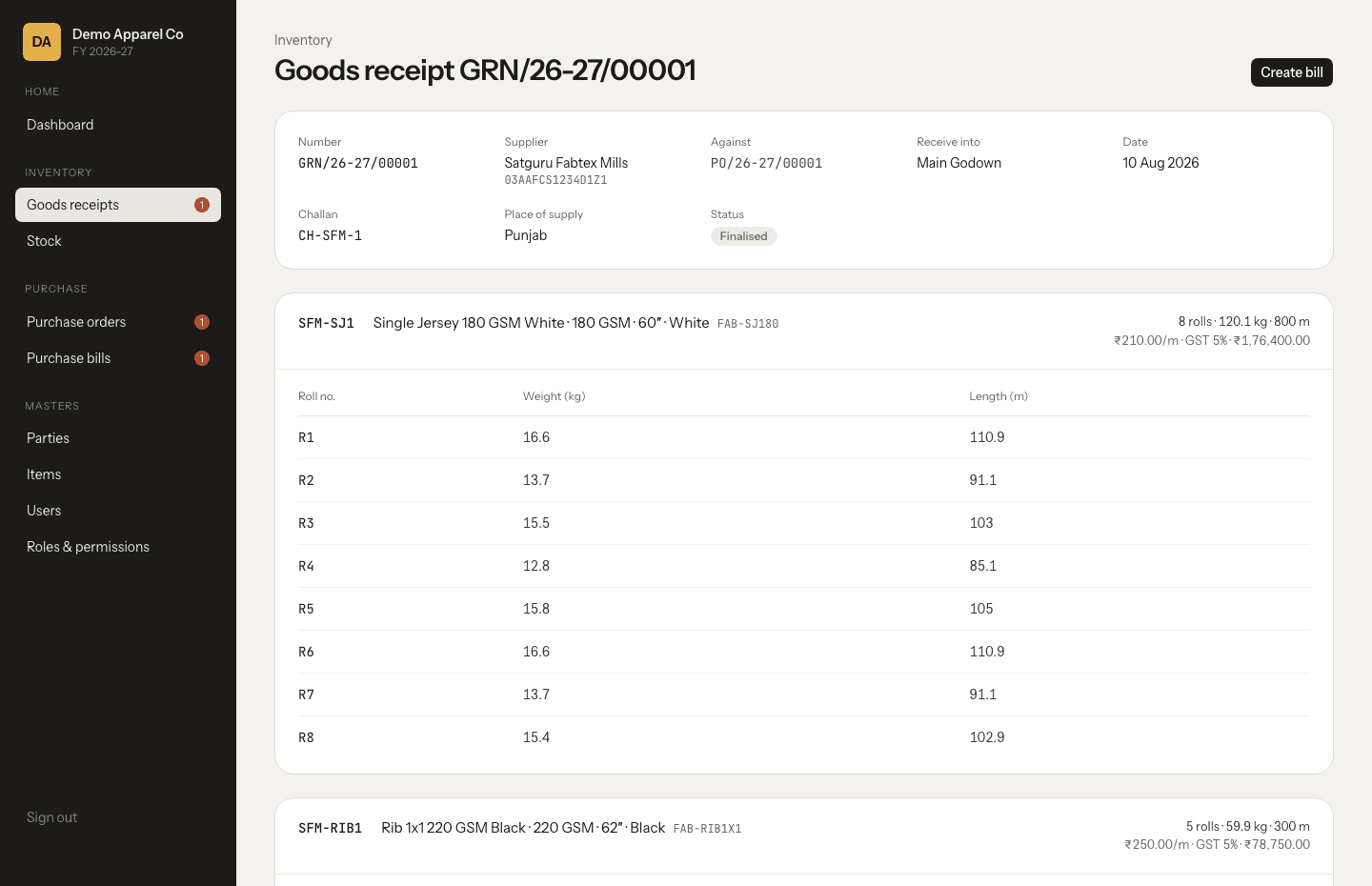
Screens from the demo company — sample data, not a client’s books
Open the live demoOne system, from fabric roll to paid invoice.
These are the modules running in the apparel build today. Yours starts from the same foundations and is shaped to your trade — we add, drop and rename to fit how you work.
Purchase
- Purchase orders
- Goods receipts by roll and lot
- Purchase and job-work bills
- Debit notes for returns and shortage
Inventory
- Append-only stock ledger
- Godown, floor, vendor and scrap locations
- Weighted-average valuation
- Reorder levels and adjustments
Production & job work
- Styles, sizes, colours and SKUs
- Routes and bill of materials per stage
- Issue and receipt at job-workers
- Wastage, shortage and fabric yield
Sales & GST
- Sales orders and delivery challans
- GST invoices and credit notes
- E-invoice and e-way bill JSON
- Credit limits per customer
Money & accounts
- Receipts and payments with cheques
- Receivables and payables ageing
- Double-entry journal
- GST summary and party statements
People & access
- Roles built from a permission list
- Draft, finalise and cancel as separate rights
- Company isolated at the database
- Unfinished entries saved as drafts
Configured ERPs fit the average business. Nobody runs the average business.
Your process is the spec
Job work, per-roll fabric, katran, per-piece vendor billing — generic ERPs treat these as edge cases to customise around. Here they were the starting point, so the screens match the way the floor already talks.
Accounting stays where it is
Most businesses already file from Tally or similar. The ERP runs its own double-entry journal and is designed to push finalised vouchers across, so there is one entry, not two.
Numbers you can trace
No quantity is ever typed into a stock table. Every balance comes from movements, and a finalised document is cancelled with reversing entries — never deleted. Audit is built in, not bolted on.
You own it
No per-seat licence that grows with your team. The code, the data and the database are yours, and the system can grow into a product you sell to others in your trade.
In phases you can use the week they land.
No big-bang go-live. Each phase replaces one set of registers and spreadsheets and runs on its own before the next begins — this is the actual sequence for the apparel build.
- 01Foundation, inventory & purchaseLive
- 02Production & job workLive
- 03Sales, GST & accountsLive
- 04Tally sync & reconciliationNext
- 05Marketplace orders & settlementPlanned
- 06Hindi, vendor portal & reportsPlanned
Show us the registers and spreadsheets you run on today.
The first deliverable is an honest map of how work and money move through your business now. From there we tell you what to build first — and whether an off-the-shelf system would serve you better.